
01
Radiology and medical imaging
Imaging methods differ in how they work and the preparation required. The method depends on the medical question. Mentioning an imaging type does not mean it is available at every facility.
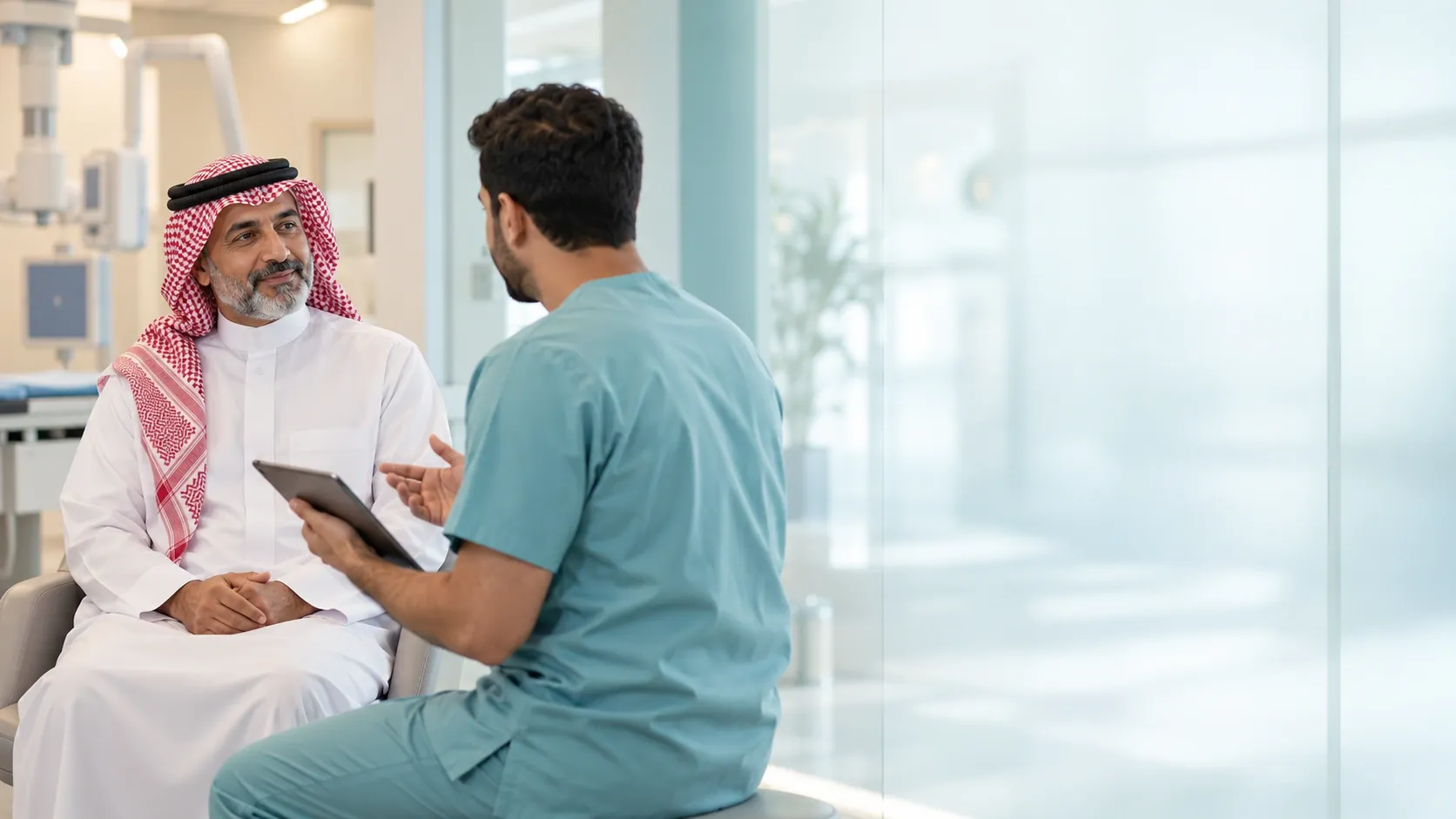
Imaging shows structures inside the body, while laboratory tests analyse samples such as blood or urine. The clinician relates results to symptoms, examination and medical history.
Not every pain needs imaging, and not every concern requires a broad set of blood tests. Discuss which tests are appropriate, what they add and how they may influence care.
Imaging methods differ in how they work and the preparation required. The method depends on the medical question. Mentioning an imaging type does not mean it is available at every facility.
Tests may support diagnosis, monitoring or screening according to assessment. Some need fasting or specific preparation, while others do not.
Ask about instructions for the particular test, and disclose medicines, supplements and pregnancy or possible pregnancy. Some imaging tests require metal items to be removed, preparation or contrast material.
If fasting is requested, confirm the duration and which drinks are allowed. Do not stop medicines yourself, and tell the team if you could not follow the instructions.
A value outside the reference range does not establish a diagnosis on its own, and a normal result does not exclude every disease. Interpretation can depend on health, age, medicines, preparation and previous results.
Discuss whether a result needs repeat testing, follow-up or another investigation. Do not change treatment based on one number without a clinical explanation.
No. Preparation depends on the test and the laboratory’s instructions. Ask for specific guidance rather than fasting by default.
They are generally interpreted alongside symptoms, examination, medical history and imaging when appropriate.
Contact the clinics to confirm the exact test, appointment and preparation before attending.
Explore related topics in our knowledge centre.